
 Ombra
Consistency rule maths: why one big day can slow you down
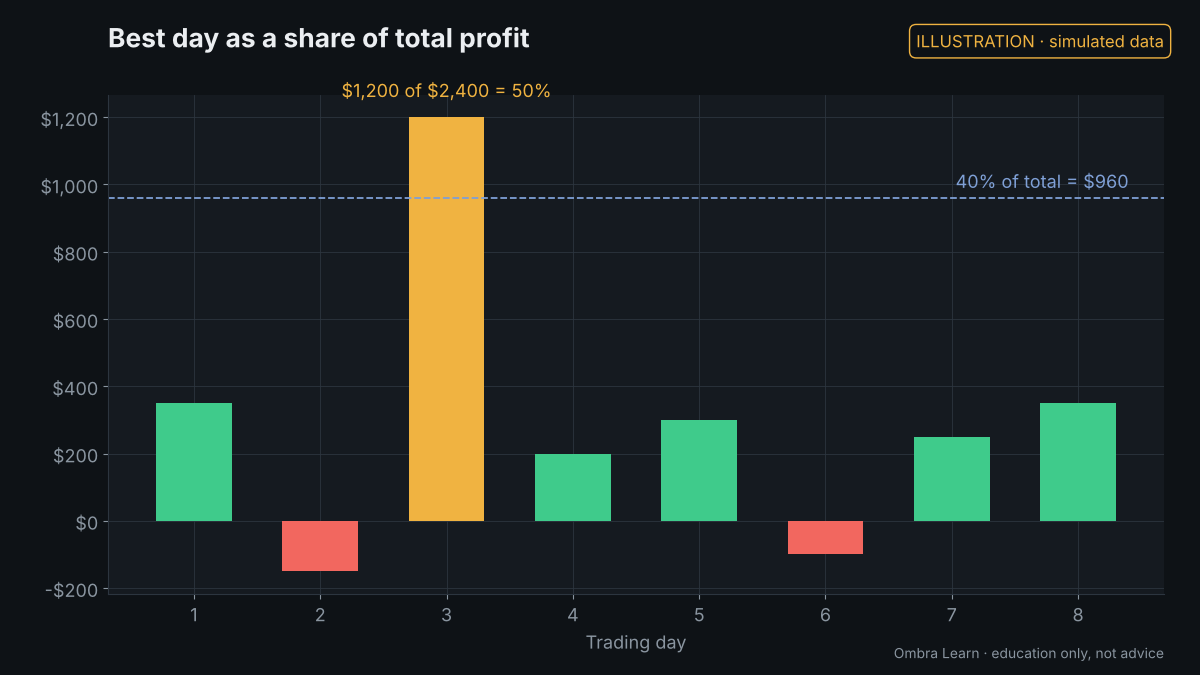
A consistency rule limits how much of your total profit can come from a single day. We use 40% here as an example; check your own firm's figure.
In the illustration, eight days add up to $2,400 of profit, and the best day is $1,200. That best day is 50% of the total, above the 40% limit.
To bring it under 40%, total profit must be at least the best day divided by 0.4: $1,200 / 0.4 = $3,000. So you need another $600 of profit, spread over other days, before the rule is met.
If you then have an even bigger day, the target moves again. That is why a steady plan often reaches a consistency target faster than chasing one large day.
Keep a running note of your best day and your total. Divide one by the other after each session and you will always know where you stand.
Education only. Not advice. Trading futures carries risk of loss; evaluations use simulated accounts.