
 Ombra
Static drawdown: the floor that never moves
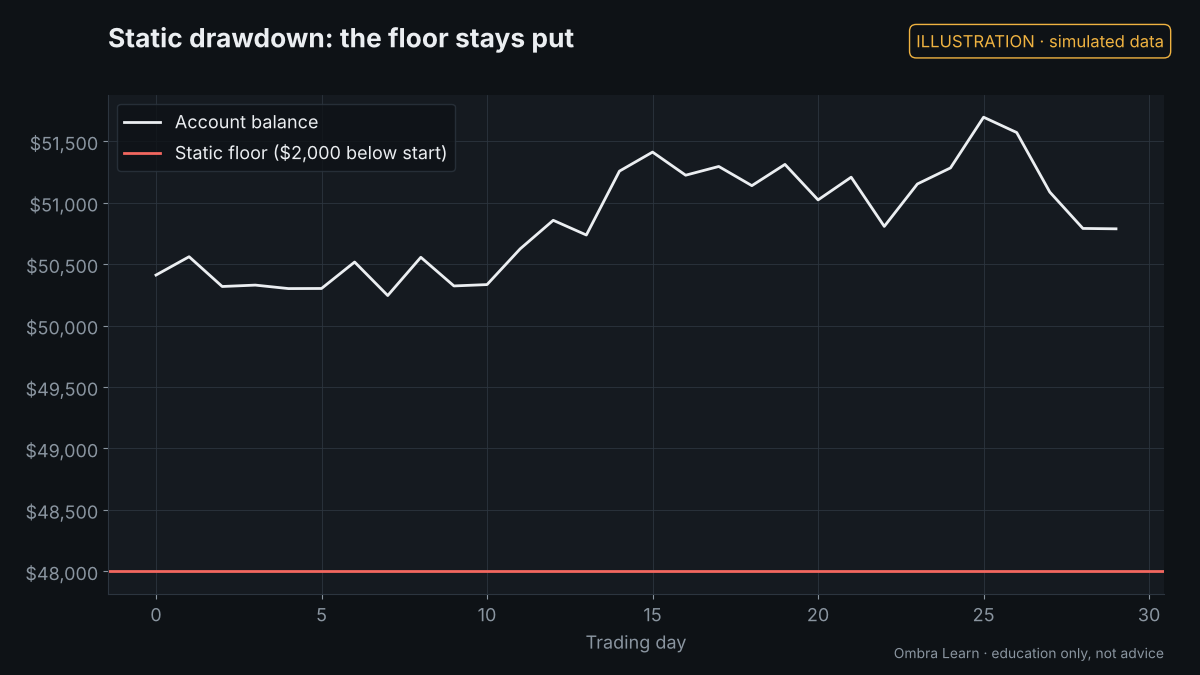
A static drawdown is a fixed loss limit. The floor is set once, a fixed amount below your starting balance, and it stays there for the life of the account.
Take a 50K account with a $2,000 static drawdown. The floor is $48,000. If your balance rises to $52,000, the floor is still $48,000, so your room to lose has grown to $4,000. If the balance falls back to $50,000, the floor has not moved either.
That is the big difference from a trailing drawdown. With a trailing floor, profit you give back still counts against you. With a static floor, early profit gives you a real cushion.
The catch is usually elsewhere: accounts with a static drawdown often have a smaller limit, a stricter daily loss limit, or a lower contract allowance. Read the whole rules page, not just the drawdown line.
The habit is simple: write the floor down on day one. It never changes, so the only number you need each morning is your balance minus that floor.
You can practise against a static drawdown, with a live meter showing your distance to the floor, in Ombra's free futures practice.
Practise this rule free (simulated, no money)
Education only. Not advice. Trading futures carries risk of loss; evaluations use simulated accounts.