
 Ombra
Consistency rules: what they are and how firms word them
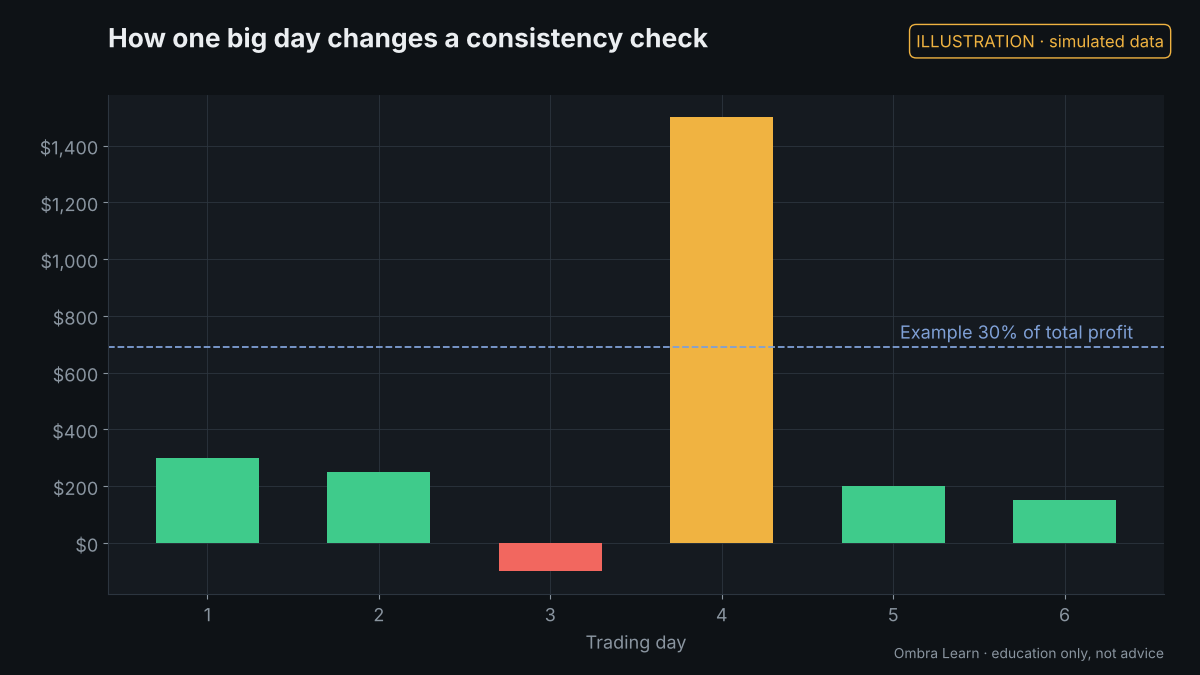
A consistency rule limits how much of your total profit can come from a single day. Firms use it to see a steady approach rather than one large result.
The most common version compares your best day with your total profit. If the limit is 30% and your total profit is $2,200, your best day can be no more than $660. A $1,500 day would be about 68% of that total and would fail the check.
Other versions exist. Some compare your best day with the profit target rather than your total. Some apply only in the evaluation, some only to payouts, and some to both. A few use a minimum number of trading days instead.
Failing a consistency check usually does not end the account. More often you need to keep trading until the ratio falls under the limit, which means more days, and more chances to give profit back.
Before you start, find the exact wording, the percentage, and when it is checked. Then you can see in advance what a large day would mean for you, instead of finding out at payout time.
Read: the consistency rule maths
Education only. Not advice. Trading futures carries risk of loss; evaluations use simulated accounts.