
 Ombra
Overtrading, and why breaks help
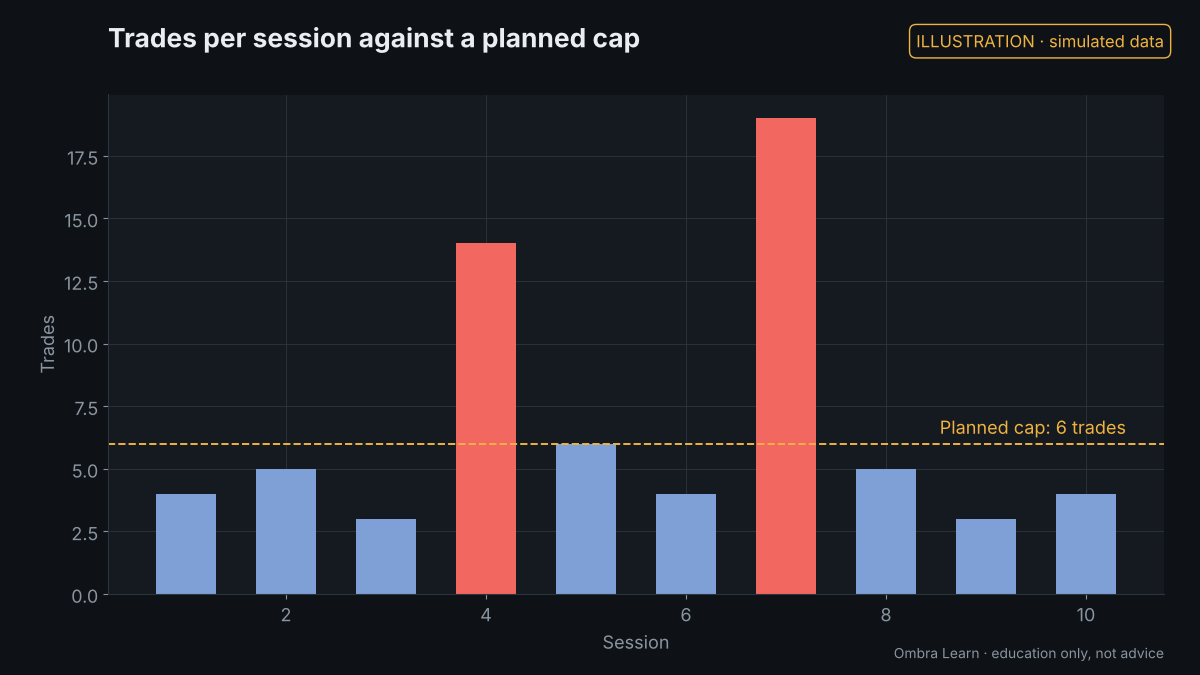
Overtrading means taking more trades than your plan calls for. It often follows a loss, a missed move or boredom, and it tends to come with larger size and looser rules.
Some signs: you take trades you would not write down as part of your plan, you shorten the time between trades, you raise size after a loss, or you keep trading after your own daily limit.
A cap on trades per session is a simple tool. If your plan usually needs three to five trades, a cap of six gives room while stopping a run of fifteen.
Breaks help too. After two losses in a row, many traders step away for fifteen minutes. After reaching their own daily limit, they stop for the day. Time away lets the urge to chase a loss fade.
Keep a short journal of trade count and how you felt. Over a few weeks, patterns become clear.
Tools can help you stick to your own limits by reminding you, but they cannot decide for you. The cap is only useful if you respect it.
Education only. Not advice. Trading futures carries risk of loss; evaluations use simulated accounts.